Monetizing your Web App: Business Model Options

Overview
Built or building a web site or application? Check out the choices below on how to generate money from your hard work.
Author
Dan Zambonini
Date
24 February 2009

Business model options

Building or launched a web site/application? Check out the choices below on how to generate money from your hard work. Note that these are not mutually exclusive: consider mixed hybrid models too.

Anything missing? Let us know in the comments.

See also our more recent post on Web App Business Models: User Needs and What People Pay For.

Business models


ModelVariationNotes
I Immediate Revenue Models for generating regular income, cash-flow (‘Self-Sufficient’ models)
I.S Subscription Charge the end-user a regular, recurring fee. Consider:
  • Minimum contract lengths
  • Buy X (days/months/weeks) get Y (d/m/w) free
  • First X (d/m/w) free (‘Trial period’)
  • Discount periods
  • Pay to remove adverts
  • Pay for additional (‘premium’) content
  • Pay for API/advanced features
  • Pay for support subscription
I.S.F Fixed A single, fixed subscription cost (e.g. to access an online magazine or a specific service).
I.S.V Variable A number of fixed-price subscriptions are available to the end-user; fee dictates feature/usage limitations, etc. This includes the ‘Freemium’ model; a (usually limited) ‘free’ option alongside one or more paid options.
I.T Third-Party Supported The end-user receives the service for free; a third-party pays the fee for a returned service.
I.T.A Advertising One or more third-parties place clearly defined adverts within the website/application. Variations of adverts include graphical banners, text, inline, pop-over, interstitial, etc. Normally charged by cost per click, cost per action, or cost per thousand impressions.
I.T.S Sponsorship One or more third parties become the ‘official’ sponsor(s) of the website. This could include fixed (non-rotating, typically prominent) adverts, integration of third-party branding (colours, slogans) and/or licensing agreements.
I.T.C Paid Content Advertorials: third-parties pay to include marketing-led content on the website.
I.T.P Paid Placement Third-parties pay to be included in lists or in the application (e.g. comparisons, reviews, entertainment listings).
I.T.R Referrer End-users are directed to third-party sites, which pay a fee to the website owner for any referred transactions (e.g. comparison sites).
I.T.L License Content Third-Parties are given access to re-use the content from the web-site for their own purposes.
I.P Payments The end-user makes individual, ad-hoc transactional purchases.
I.P.U Pay-per-use Micropayments: the end-user is charged a fee to use an online service (one-off, or for a limited time). This includes the 'brokerage' model, where user(s) are charged a fixed-price or percentage per transaction (e.g. ebay). This also includes the purchase of ‘credits’ e.g. 10 uses of the service for a fixed cost. Discounts can be offered for bulk purchases.
I.P.P Physical Products The typical e-commerce model; includes books, CDs, holidays, tickets, etc. Typically each ‘physical product’ has a non-arbitrary cost associated with its production.
I.P.V Virtual Products The end-user purchases a ‘digital’ product that typically has a negligible cost of replication. This includes virtual gifts (e.g. Facebook), in-game items (e.g. World of Warcraft), and other virtual assets (e.g. land in Second Life).
I.P.R Related Products The end-user has free access to the main product/service. An additional, optional charge is made for related ‘added value’ products/services, e.g. documentation, support, commercial versions, related iPhone or Android application, etc.
I.P.D Donations The website relies on voluntary end-user donations (e.g. a ‘Tip Jar’).
L Long-Term Revenue Strategic, ‘Invest and Reward’ models where costs are incurred initially for a longer-term ‘pay off’.
L.E Establish and Exploit Attract a substantial audience before monetizing.
L.E.R Re-use/Re-sell Re-sell/re-use the data/content, usually from User Generated Content websites e.g. create books, posters or other purchasable products from data/content created on site.
L.E.P Platform Establish a platform, then charge for third parties to participate once an audience has been established e.g. iPhone. See also Facebook.
L.E.B Branding Build a ‘personal brand’ for yourself/your company. Once awareness is raised, go on Conference/Workshop/‘Expert’ circuit, or release a book, etc.
L.S Sell/Exit Create a popular application/website, then make it someone else’s problem to monetize e.g. YouTube

Meta-models

The following business models can be applied in addition to most of the basic revenue models described above.


ModelVariationNotes
M.R Revenue Share End-users are offered a cash incentive to make the website/application generate revenue, by sharing a percentage of revenue with them (usually based on their personal referrals or popularity of their content).
M.R Re-Seller The end-user can re-sell the online service.
M.R.A Affiliate The end-user is paid to direct customers to the website, typically by listing/selling the products/services elsewhere.
M.R.W White Label The end-user can brand/tailor the online service and re-sell it as their own (typically taking a percentage of the generated revenue, or paying a fixed subscription cost to the original service).

Popular business models

We spent a few hours going through the Webware 100 Top Web Apps for 2008, analysing the business model(s) used by each. The chart below shows the results of this survey: 34% use Advertising, 12% a Variable Subscription model, and 8% each for Virtual Products (typically digital downloads), Related Products (typically a large software company offering a free product to attract you to their platform) and Pay-Per-Use.
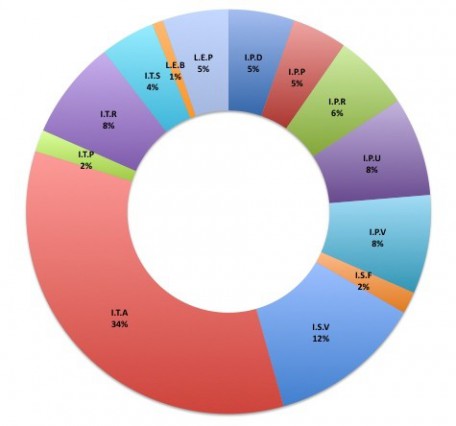
A survery model

Further reading

Comments

Add a comment

  • David Bearman

    24 Feb 2009 14:57
    Nice list Dan. I'd 'add' or elaborate, one. For a number of years we developed fairly complex models around licensing, which might deserve more examination here than in your one (ITL) reference. For examle, the Art Museum Image Consortium licensed content to third-party distributors, who were in turn authorized to develop competing applications and re-license content to higher education institutions who allowed third-parties (students and teachers) tomake end-uses of it. (see:"The Economics of Publishing Cultural Heritage Content Online: The AMICO Experience", in Proceedings of ICHIM03, Paris, 2003. See http://www.archimuse.com/publishing/ichim_03.html">http://www.archimuse.com/publishing/ichim_03.html) The general model of licensing content so others can develop applications that return income is under-utilized I think.
  • Juan Chaparro

    3 Mar 2009 01:58
    Love this Article...It's perfect as I do web 2.0 consulting to businesses. Thanks for sharing
  • Andy Wright

    12 Mar 2009 18:18
    Thanks for a great article! This is just what I was looking for.
  • digvijay singh

    19 Mar 2009 18:46
    Awesome..Awesome...Awesome. You just helped me define my market in a better manner. Thanks a Ton
  • warikoo

    26 Mar 2009 05:16
    Great article... Quick question though - Where would lead gen fall? My experience is that advertising, while considered most basic, is rarely the bread earner for a site, unless it gets a huge volume up and running. Lead gen works very well then...especially if one goes down the simple route of keeping acquisition costs low (organic traffic or better ad optimization) and pricing the leads appropriately..!
  • Arjun

    26 Mar 2009 11:07
    @warikoo I think lead gen would fall under the M.R./Revenue Share model which is basically saying you pay the referrer based on quality of lead.
  • Herbert

    27 Mar 2009 10:06
    This list is also an excellent starting point for small e-business entrepreneurs to develop a monetization strategy. These business models help you to develop your own monetization mix. Well done!
  • Owen Brunette

    27 Mar 2009 16:00
    The other dimension is to know which of these sites are generating profit either by having some published indication or maybe just from knowing the failure rate for the different models. For example if these sites had also been in the Webware 100 or even 500 six or twelve months ealier it might indicate a sustainable business model and allow better assessment of which models are generating money instead of burning their investor's money. Using the webware list which is prioritised by 'coolness' rather than profitability or traffic is also an issue and it would be interesting to contrast with the models of the Alexa top 100 or other sources.
  • Subbaraman Iyer

    31 Mar 2009 10:36
    Well, nice to hear about the free business models! how does it make a business model, if ultimately this can't be sustained. A case in point is Facebook with 200 million users and still has no business model. I wrote about the challenges it faced in my blog at : http://subbaiyer.wordpress.com/2009/03/31/facebooks-positive-and-unique-problem/">http://subbaiyer.wordpress.com/2009/03/31/facebooks-positive-and-unique-problem/
  • Robin Good

    10 Apr 2009 23:02
    Wonderful work Dan, really useful.

    I was wondering whether it would be appropriate to include also Fund Raising as a specific model. I have seen in the past some sites resort systematically to it with excellent results.
  • Joe Stepniewski

    14 Apr 2009 15:06
  • Paddy

    27 Jun 2009 03:45
    Great analysis, really thorough, but theres a burning question left unanswered for me...

    While its great to know who uses what business model, what I REALLY want (need) to know is which ones are more successful?

    If the 34% majority using ITA are only turning over $1,000 a month, then Im kinda interested in their model. But if the 8% using IPU are doing $10,000 a month, then Im really interested in their model.

    Any ideas on which of the models seems to give the best returns?
  • Natalie

    2 Jul 2009 20:12
    This is the most detailed article I've read on the subject - and believe, I've been looking for that kind of info as I'm working on a new web app!

    Thanks for doing all the research and presenting it in such an easy to read form.
  • Serge

    4 Jul 2009 14:08
    Very valuable info. Thank you very much
  • Avery

    10 Jul 2009 08:27
    Very useful article, thanks for sharing! Bookmarked :)
  • Jonas

    22 Jul 2009 22:50
    Oh, I was just sketching up a similar list. Great work anyway.
  • Michael Pillsbury

    7 Aug 2009 21:57
    All my websites are currently I.T.B - Third-parties pay to be included in lists or in the application (e.g. comparisons, reviews, entertainment listings). This way I add content to the website while earning money from commision
  • Dave

    10 Aug 2009 17:55
    There are so many startups looking to develop a web application that attracts thousands or occasionally millions of users but they don’t think about how the money is going to be generated. If you come up with an idea for a service which is going to attract millions of users, yet you don’t know who those users are, you’ve already got a bad start.
  • Melen

    10 Aug 2009 23:12
    I see that Advertising model is most used but I wonder what the breakdown is with actual $ revenue is calculated.
  • Laura Nina

    12 Aug 2009 03:01
    The business model is really understandable. Good for learning material in the Entrepreneurship course. I had one in the Business Feasibility Study, but doesn't look like this one. Thank you.
  • No Prescription Color Contact Lenses

    14 Aug 2009 03:54
    This list is also an excellent starting point for small e-business entrepreneurs to develop a monetization strategy. These business models help you to develop your own monetization mix. Well done!
  • Online Bathroom & Tile retailer

    14 Aug 2009 18:29
    There are also many overlaps in the business models. TileSupply is based on Physical Products. However, I have seen many business models that both sell physical goods and sell advertising.
  • tminarik.co.uk PLR

    15 Aug 2009 02:04
    I offer a lifetime membership but I would consider it to be Physical Goods because the customers are getting something tangible from it.
  • UK website traffic

    15 Aug 2009 16:39
    I sell UK website traffic, would you consider that a virtual good?
  • Dell Chargers

    17 Aug 2009 19:21
    I think that the best business model is to sell physical goods as you usually get the biggest profit margins.
  • Internet Marketing Consultant

    18 Aug 2009 05:57
    Great to see a good post on monetization if often gets overlooked.
  • John

    27 Aug 2009 06:12
    I think you could have included the link selling in the table. Most of the blog owners are earning now a days through selling their link spots to other webmasters. This facilitates in consistent earning.
  • Cleveland Business Broker-SK Consulting Associates

    28 Aug 2009 01:48
    I wonder if a free web subscription service that only charges "Pay to remove adverts" would really work... are people actually willing to pay extra money just to remove banners or popups? I guess it depends on the niche and demographics...
  • home tutor

    28 Aug 2009 09:26
    For me, the subscription model has worked just fine. Overall this is a great portfolio of all possible monetizing options for a web business.
  • Seo Blog

    29 Aug 2009 09:48
    this was really good stuff. This will help us to manage the web business in better way. Looking forward for updated information.
  • Lukisan

    29 Aug 2009 12:04
    Very comprehensive article, thank you for sharing it with us.
  • Obama

    2 Sep 2009 20:30
    Excellent road map of the various methods available to the webmaster. Thank you, it is nice to have all the possibilities summarized in one place.
  • internet marketing Melbourne

    7 Sep 2009 02:31
    great post.
    could fund raising or a similar activity be part of the specific business model?
  • Wedding Photographer

    7 Sep 2009 15:58
    the main problem about CPA world is the fraud going on both ways. Neither affiliates nor networks are honest and innocent.

  • zhuzhiyan

    11 Sep 2009 09:04
    Subscription based apps would be the best way to monetize, because it also leads to passive income that you will collect each month.
  • Games

    17 Sep 2009 15:37
    I was wondering whether it would be appropriate to include also Fund Raising as a specific model.
  • Johnny Blaze

    25 Sep 2009 13:46
    Wow, Ive been looking for something like this for quite sometime. I developed a shopping cart web app and have been trying to figure out the best way to market it. This will do just fine. Thanks for offering this for free.

    Johnny B
    CEO,Halo Cmpany
    http://www.halocigs.com
  • band

    28 Sep 2009 22:02
    Quick question though - Where would lead gen fall? My experience is that advertising, while considered most basic, is rarely the bread earner for a site, unless it gets a huge volume up and running. Lead gen works very well then...especially if one goes down the simple route of keeping acquisition costs low (organic traffic or better ad optimization) and pricing the leads appropriately..!

    Thanks and Regards
  • jeims

    15 Nov 2009 20:11
    Microsoft would be working on solutions that really amazes people, as Apple does,
    or OS's that really works, as Linux and BSC do. The history shows that all empires come to an end....
    clomid
  • Trabajo

    4 Dec 2009 23:42
    What is the best business model for a web 2.0 app like facebook app?
  • Moni

    25 Mar 2010 08:22
    This is a perfect business model, I will love to implement this, Thanks for sharing such a useful post.
  • alluktraffic28

    21 Apr 2010 03:46
    Very nice and and complete post I think that the best business model is to sell physical goods as you usually get the biggest profit margins.
  • philip

    14 May 2010 13:35
    The chart that you have shown under "Popular Business Models" is something similar to the analyzed data on the web whenever we do any kind of research.

    Thanks for sharing this.
    Philip
    http://www.viteb.com/website-development/
  • seo company

    25 May 2010 17:50
    The chart that you have shown is something similar to the analyzed data on the web, this commission based program allows affiliate marketers to place ads on their websites or other advertising efforts such as email distribution in exchange for payment of a small commission when a sale results.
    I think that the best business model is to sell
    seo companyphysical goods as you usually get the biggest profit margins.
  • Seo Company

    15 Jun 2010 10:44
    Seo Company qualifies to distinguish the factors affecting the websites of such big businesses. A seo firm is that which specifies the aims and objectives to its customers and works with full dedication to meet those objectives. It brings within the essential forms to encounter the specialty where the search engine optimization firms are given their due importance as to cater the customers either facing a considerable loss or have just initiated their business and want to be at the top.
  • joel

    16 Jul 2010 06:58
    Earning money has online never been this easy and transparent. You would find great tips on how to make that dream amount every month. So go ahead and click here for more details and open floodgates to your online income. All the best.
  • DarleneDoyle32

    19 Jul 2010 13:01
    Following my own exploration, thousands of people all over the world receive the personal loans from good banks. Therefore, there is a good chance to get a short term loan in any country.
  • Ivan Villanueva

    17 Aug 2010 10:23
    The problem with Webs is that you don't know when the owners of the multiple software patents you are infringing will ask you for license fees (or worst: shut your web down with a court decision). See examples of such patents on the right column of:

    http://petition.stopsoftwarepatents.eu
  • Fishing Gears

    4 Sep 2010 05:43
    nice article
  • fakhrakanwal

    9 Feb 2011 05:16
    I am so glad I discovered this weblog. Thank you for the information. You make a whole lot of beneficial points in your post. Rated 5 stars
  • Keith Hall

    18 Feb 2011 23:16
    Great article Dan! I bookmarked this last year and keep coming back to it to spur on new thoughts. I'm in the UK and recently launched Cloudware City - http://cloudwarecity.com which can make it easy to offer free or paid subscriptions to web apps, services or content of almost any website!

    As well as an easy to integrate API, subscriber management, http://cloudwarecity.com supports recurring billing, and even helps with sales and marketing through its online app store.

    Since a lot of the pain in development and administration of subscriptions and billing systems is taken away, it leaves the developer to concentrate on the web app, service or content. It can help get an idea off the ground with little risk.

    Hope this helps someone!
  • Sean

    28 Feb 2012 03:52
    This is a very good article and thank you very much for sharing.
  • Huss

    25 Mar 2012 23:22
    Nice list of ideas for web business models. Many clients get overwhelmed with the number of options available. http://businessmodelinstitute.com

Add your comment

This will not be shown
If provided, we'll link to this from your name