Letting anyone zoom into a National Gallery masterpiece
At the time of this project, the National Gallery’s website had more visitors each year than the gallery itself, and it needed a content platform that could grow with them. Box UK implemented and integrated a new CMS, and built an accessible Zoom Tool that let visitors examine any painting in fine detail, with no plug-ins and operable by keyboard.
In short
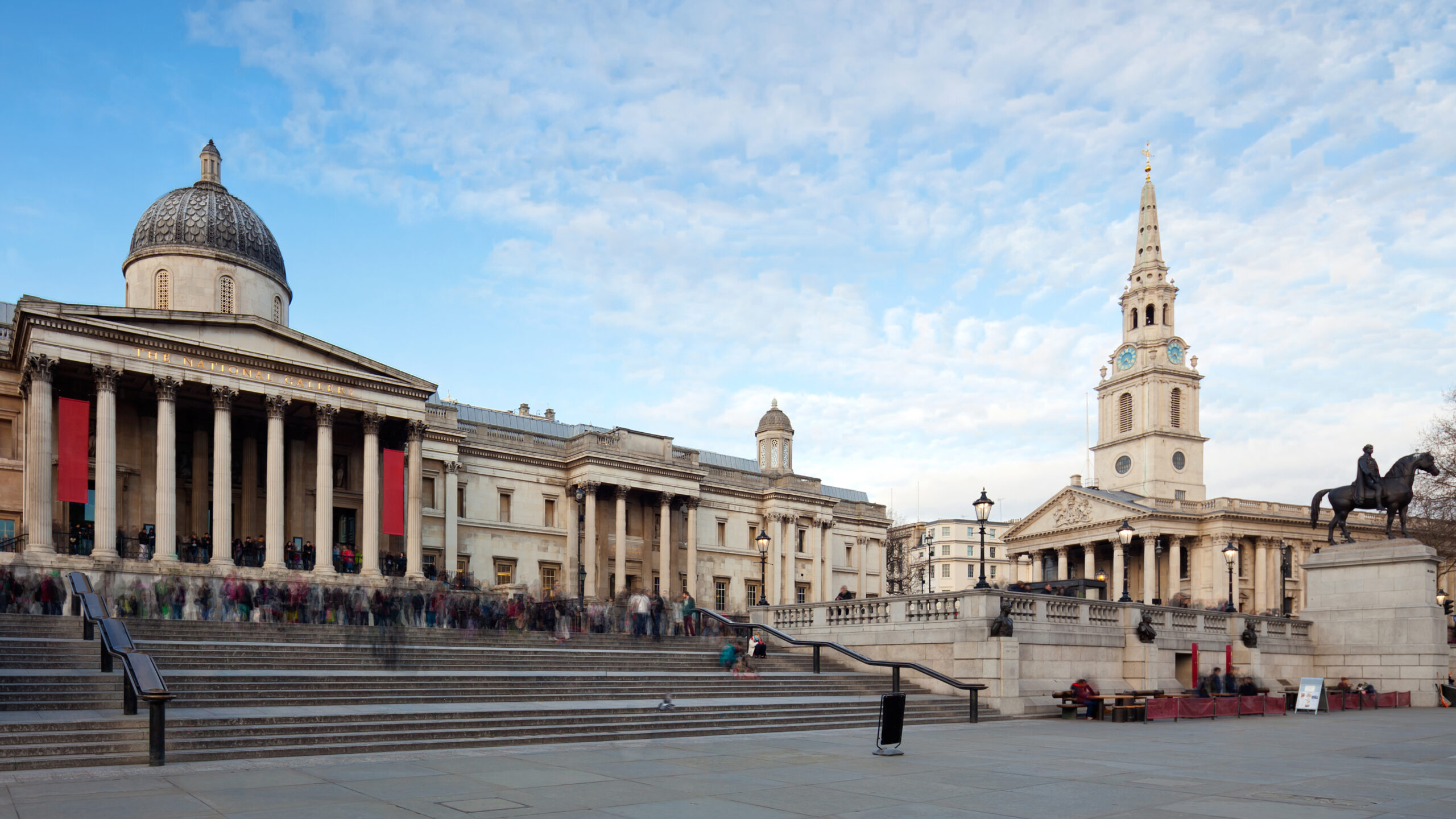
The National Gallery, founded in 1824, houses more than 2,300 paintings on Trafalgar Square. At the time of this project, its website drew over 6 million unique visitors a year, more than visited the gallery itself, and it needed a platform that could keep up.
- Box UK’s Amaxus CMS, integrated with the Gallery’s existing systems
- A platform built to take on a large migration of images, documents and media
- File management for the digital versions of the Gallery’s collection
- A bespoke Zoom Tool for examining any painting in fine detail, with no plug-ins and keyboard control
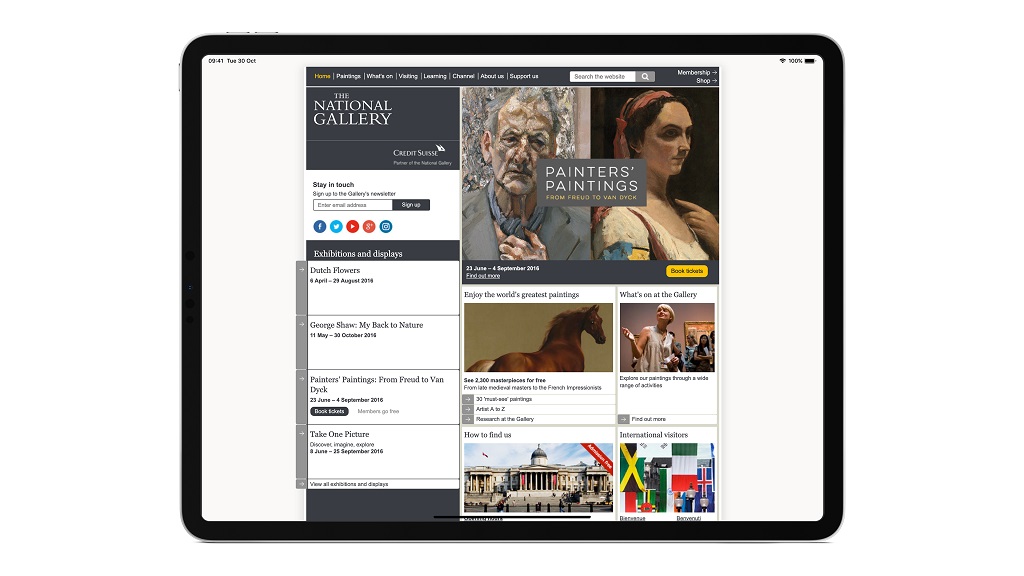
- A reinvented website that built on the previous site’s content, with better usability and functionality
Customer background
The National Gallery was founded in 1824 and houses more than 2,300 paintings, from the mid-13th century to the beginning of the 20th, in its home on Trafalgar Square in London.
At the time of this project, its website attracted over 6 million unique visitors a year, more than visited the gallery itself.
That made the website one of the main ways people reached the Gallery’s collection.
The challenge
The Gallery needed a web content management system that would integrate with its existing systems, and that was scalable and extensible enough to support the website’s expected growth and development.
The new CMS also had to cope with migrating a vast amount of website content and digital assets, from images and documents to a diverse range of media files.
And as the audience grew, so did visitors’ needs and expectations. Both the CMS and the finished website had to be highly usable and accessible.
Our approach
Box UK chose its own Amaxus CMS as the basis for the new website, for its stability and flexibility, and integrated it with the Gallery’s existing systems. Where the Gallery needed something the CMS didn’t provide, Box UK built it.
Accessibility guided the technical choices. Box UK used progressive enhancement, building features that work for everyone first and adding richer behaviour on top, and avoided any need for plug-ins.
The most visible result of that approach was a new way to look at the paintings.
What we built
The new site ran on Amaxus, integrated with the Gallery’s existing systems. Its file management system made it easier for the Gallery’s team to manage the digital versions of the collection, alongside the many layers of multimedia content on the site.
The centrepiece was a bespoke Zoom Tool module that let visitors zoom into any painting in fine detail. Built with PHP and AJAX using progressive enhancement, it needed no plug-ins and could be operated using the keyboard, so visitors who didn’t use a mouse could explore the paintings too.
The outcome
The reinvented National Gallery website built on the previous site’s content and on the Gallery’s physical collection, with a better user experience and more functionality. Visitors anywhere could examine the Gallery’s paintings in fine detail, including those using a keyboard alone.
Behind the scenes, Amaxus made content easy for the Gallery’s team to upload and develop, giving it a flexible base for future improvements to the site.
Frequently Asked Questions
Avoid plug-ins, make every control usable from the keyboard, and build with progressive enhancement so the basic view works before richer features are added. The National Gallery’s Zoom Tool needed no plug-ins and could be operated by keyboard.
Moving images, documents and media files into the new CMS, and connecting it to the systems that already manage the collection. For the National Gallery, the CMS had to cope with a vast archive and integrate with existing systems.
Building a basic version that works for everyone, then adding richer features for browsers that support them, so nobody is locked out.
Because the website may reach more people than the building. When the National Gallery’s site drew more visitors than the gallery, an accessible website meant access to the collection.
What this means for your organisation
If you’re a museum, gallery or heritage organisation, your website may already reach more people than your building. That puts accessibility and the quality of your digital collection at the centre of your mission.
If you’re rethinking how people explore your collection online, send us a few lines about it. We’ll tell you where we’d start.
Talk to one of our digital experts

Tom Houdmont
Chief Technology Officer
Do you have a great idea for a project you need support with?
Tom is CTO at Box UK, with 12 years’ experience helping clients deliver ambitious digital products. His background spans Solution Architecture, Front End Development and AI adoption, with particular expertise in high-traffic websites that perform reliably at scale and in embedding AI into delivery practice.
Or call us on 020 7439 1900
Related case studies
-

Royal Photographic Society
Read more: Royal Photographic SocietyUser research that shaped the brief for RPS’s new website
-

Royal Yachting Association
Read more: Royal Yachting AssociationA usability review of the RYA’s club finder tool
-
National Trust Wales
Read more: National Trust WalesProviding bilingual access for the National Trust Wales audience.
Have a project you’d like to discuss?
Give us a call on 020 7439 1900 or fill in the form and we will get back to you.