Clearing years of technical debt so RS DesignSpark could move forward
Work on a new version of RS Components’ DesignSpark platform was being held back by its dependencies on an old system with years of technical debt. Box UK reviewed both codebases, stabilised them, increased the number of tests in the existing application by more than 150%, and then added the features and revenue opportunities DesignSpark needed.
150%+
more tests in the existing application
~2x
total test coverage
In short
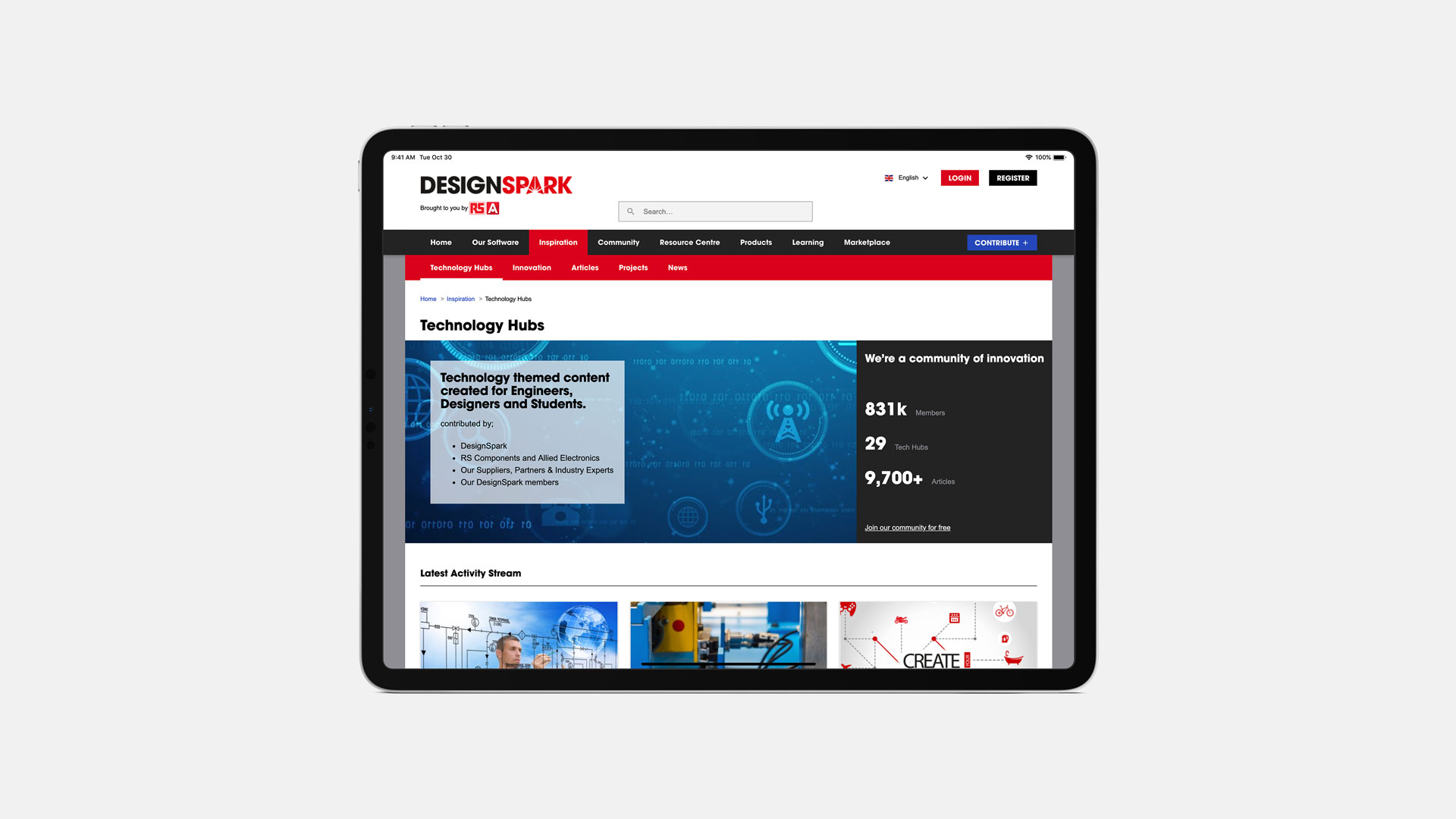
DesignSpark is RS Components’ online community for engineers, offering free design software, technical content and support. RS had started building a new DesignSpark platform, but dependencies on an old system with years of technical debt were holding it back.
- A code review of both platforms: dependencies, security, points of failure, test coverage and UX
- Both platforms stabilised, with more than 150% more tests and nearly double the coverage
- A standardised design tools section, a streamlined support channel and usage data for RS
- A content audit before migration, plus better navigation, search and publishing workflows
- Advertising, product links and gated content linking community engagement to RS revenue
Customer background
RS Components, part of RS Group, is a one-stop shop for engineers around the world, offering more than half a million products from around 2,500 suppliers. Alongside its catalogue, it runs DesignSpark, an online platform where, at the time of this work, around 750,000 engineers came for design software, technical content and support.
As the community grew, so did RS’s ambitions for DesignSpark. Box UK had already worked with RS across numerous departments and projects, so when those ambitions ran into trouble, RS brought the problem to Box UK.
The challenge
RS had already begun development work on a new DesignSpark platform. But progress was being slowed by the volume and complexity of its dependencies on the existing system, which had built up high levels of technical debt over many years.
RS knew that if those issues could be resolved, the project could deliver a great deal more.
The first step was to understand exactly what was going on in both codebases.
Our approach
Box UK began with a code review of both the old and new platforms as they stood, to get a clear picture of the current situation and inform future development. The team mapped the location and nature of existing dependencies, identified potential security vulnerabilities and points of failure, and reviewed the level of test coverage. A complementary UX review highlighted where usability could be improved.
The findings went into clear, comprehensive reports, supported by visual representations of the DesignSpark codebase that gave an instant, overall view of its quality. With those, the team could move straight into stabilisation, confident that the effort was going where it was most needed, and able to measure its effect.
“The Solutions Team were totally blown away with what we have achieved so far – it more than meets our expectations and takes us to a new level.”
Dave Cole, Web Platform Manager – DesignSpark, RS Components
What we built
Stabilisation came first. Box UK put in place tests to identify and resolve ongoing issues, increasing the number of tests in the existing application by more than 150% and almost doubling total test coverage.
Once both platforms were stable, work turned to features that would help RS meet DesignSpark’s key performance indicators, which included acquisition, engagement and click-through rates. A priority was the section of the site giving engineers access to free design software tools. Box UK standardised and simplified the look, feel and behaviour of those tools, introduced a streamlined support channel, and gave RS access to usage data and insight.
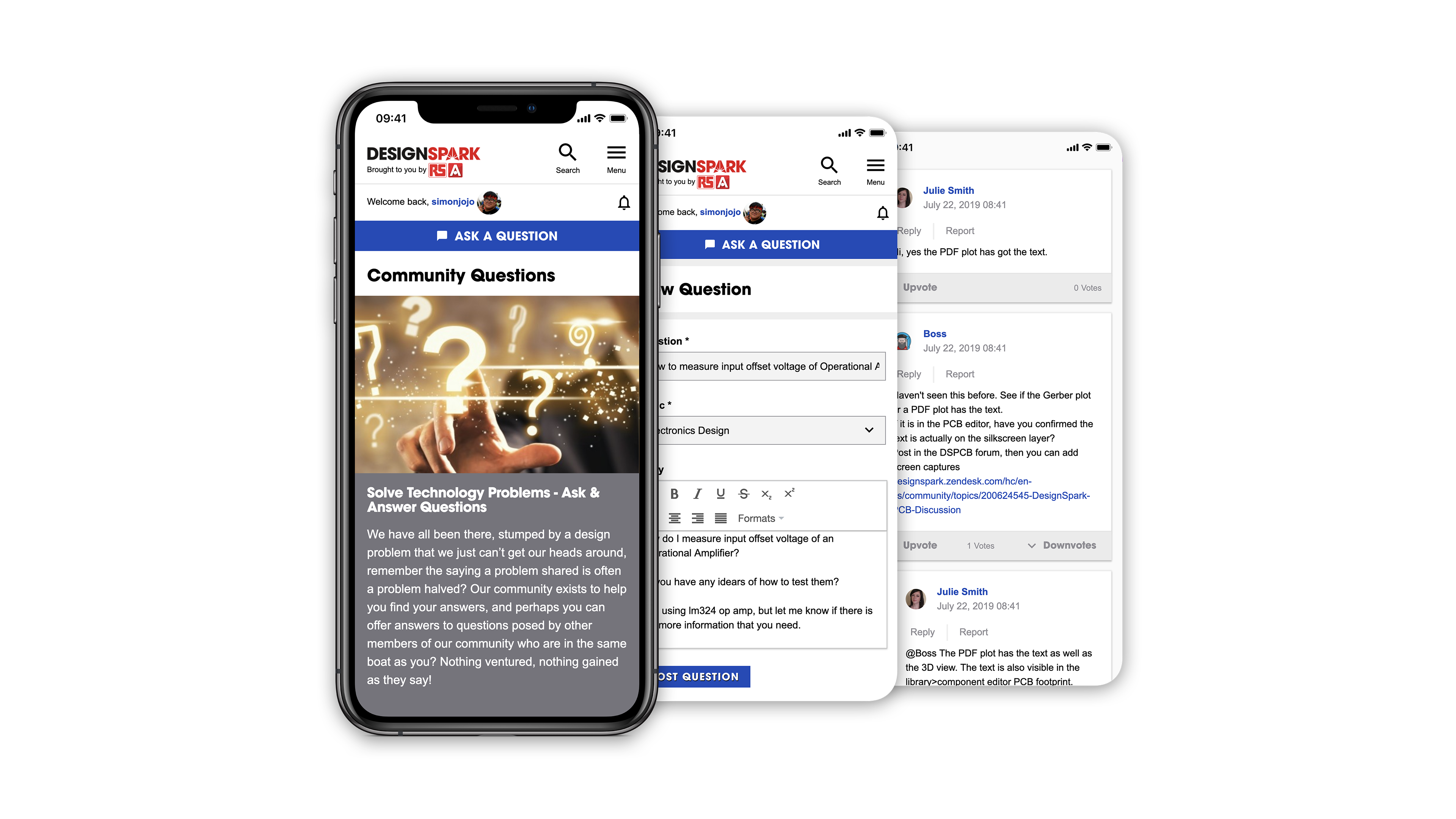
For the community itself, Box UK improved the knowledge-sharing processes at the heart of the platform, helping to drive down its total cost of ownership. A comprehensive review and audit of content before its migration to the new platform, together with improvements to the information architecture, navigation and search, made information quicker to find. Workflows and role-based permissions streamlined publishing without compromising quality, so the site could be opened up for members to contribute.
Revenue was the final piece. Box UK’s developers implemented a third-party advertising solution, with UX consultants advising on placement so ads appeared where users would expect and accept them. Links to relevant products in the RS Online catalogue and the gating of especially valuable content gave RS direct attribution from community engagement to its bottom line.
The outcome
With both platforms stabilised and a much stronger set of tests in place, RS could move forward with the new DesignSpark platform. Engineers gained easier access to design tools, content and support, and members could contribute content through a structured publishing process.
The improvements made DesignSpark a more attractive and useful destination for engineers, and increased the platform’s ability to generate revenue through advertising, product links and gated content. That moved DesignSpark further along the path to self-sustainability, with community engagement linked directly to RS Components’ bottom line.

Frequently asked questions
Review both codebases, map the dependencies between them, and stabilise before adding features. That’s how Box UK approached DesignSpark.
Where the dependencies are, potential security vulnerabilities and points of failure, and current test coverage, ideally with visual maps so anyone can see the state of the code. DesignSpark’s review covered all of these, alongside a UX review.
Track test counts, coverage and defects. On DesignSpark, the number of tests in the existing application rose by more than 150% and total coverage nearly doubled.
With carefully placed advertising, links to relevant products, and gated premium content. DesignSpark used all three.
Yes, with workflows and role-based permissions. DesignSpark introduced them so members could contribute without compromising quality.
What this means for your organisation
If you’re building something new on top of a system with years of technical debt, the new work will go slower than anyone expects until the old problems are dealt with. Stabilising first can feel like a delay, but it’s usually the fastest route.
If your platform work keeps getting stuck, send us a few lines about it. We’ll tell you what a code review would look at first.
Talk to one of our digital experts

Pete Withers-Jones
Head of Development
Do you have an idea or a project you need support with?
Pete Withers-Jones leads Box UK’s Development Practice, and has over 20 years of experience in software development, working across various industries and technologies.
Or call us on 020 7439 1900
Related case studies
-

Sodexo Discounts
Read more: Sodexo DiscountsDigitally transforming Sodexo’s Employee Benefits platform.
-

RS Components Product Data Library
Read more: RS Components Product Data Library20M records imported in a matter of days 6 suppliers’ records in…
-

British Medical Journal
Read more: British Medical JournalRebuilding the Best Practice app for clinicians worldwide
Have a project you’d like to discuss?
Give us a call on 020 7439 1900 or fill in the form and we will get back to you.