
Bringing dozens of sites into one: the Royal College of Nursing’s new digital platform
The RCN’s members were meeting it across multiple microsites, each branded differently, while the main site had become cluttered with over 30,000 pages and documents. Box UK led discovery, research, design and build of a single Sitecore platform, testing it with members from beta at the RCN’s annual Congress through to full launch.
440k
RCN members at the time of the project
30k+
Pages and documents brought into one platform
114
Usability sessions with members at the RCN’s Congress
In short
The Royal College of Nursing supports and represents around 440,000 nurses in the UK and worldwide. Its online presence was spread across separately branded microsites, and its main site held over 30,000 pages and documents that had become hard to navigate.
- Box UK ran discovery and user research to find the most important tasks and journeys.
- We built a single Sitecore platform, with a new content strategy and customised editing tools.
- A beta launched at the RCN’s annual Congress, where we ran 114 usability sessions with members.
- Testing continued through soft launch to full launch, feeding findings back into development.
- Members said the new site was cleaner and easier to navigate.
Customer background
The Royal College of Nursing (RCN) is the professional body and trade union for nursing in the UK, with around 440,000 members in the UK and worldwide. Its website is central to how it delivers support and representation, and nurses use it for advice, learning and news.
The challenge
Over time, the RCN’s members had come to meet it across numerous microsites, each with its own branding, content editors and workflows. The main site had become cluttered, holding more than 30,000 pages and documents that were hard to find.
Mobile traffic was growing. And the RCN wanted its website to become a real-time network for nursing professionals, supporting education, collaboration and policy as well as information and support.
Our approach
We started with discovery across the RCN, gathering feedback from teams around the organisation and analysing the existing sites’ usability, functionality and architecture. That identified four priorities:
- bringing the RCN’s many sites, editors and workflows into one place
- making more than 30,000 pages and documents easier to find
- setting the right approach for growing mobile traffic
- aligning the member experience with what members actually need
User research, including end-user workshops, surveys and analytics reviews, showed who the RCN’s users were, what they needed and in what contexts, and which pages and tasks mattered most. Those high-priority journeys got the closest attention from our UX consultants.
We also advised on how the RCN could extend its member services, including demonstrating how Sitecore’s personalisation could show members information based on their role, location and interests.
Discovery gave the RCN a clear programme of work, with likely budget and timescales, before the build began. We then built the platform using agile scrum, so the RCN could see progress throughout and priorities could change as stakeholder needs did.
What we built
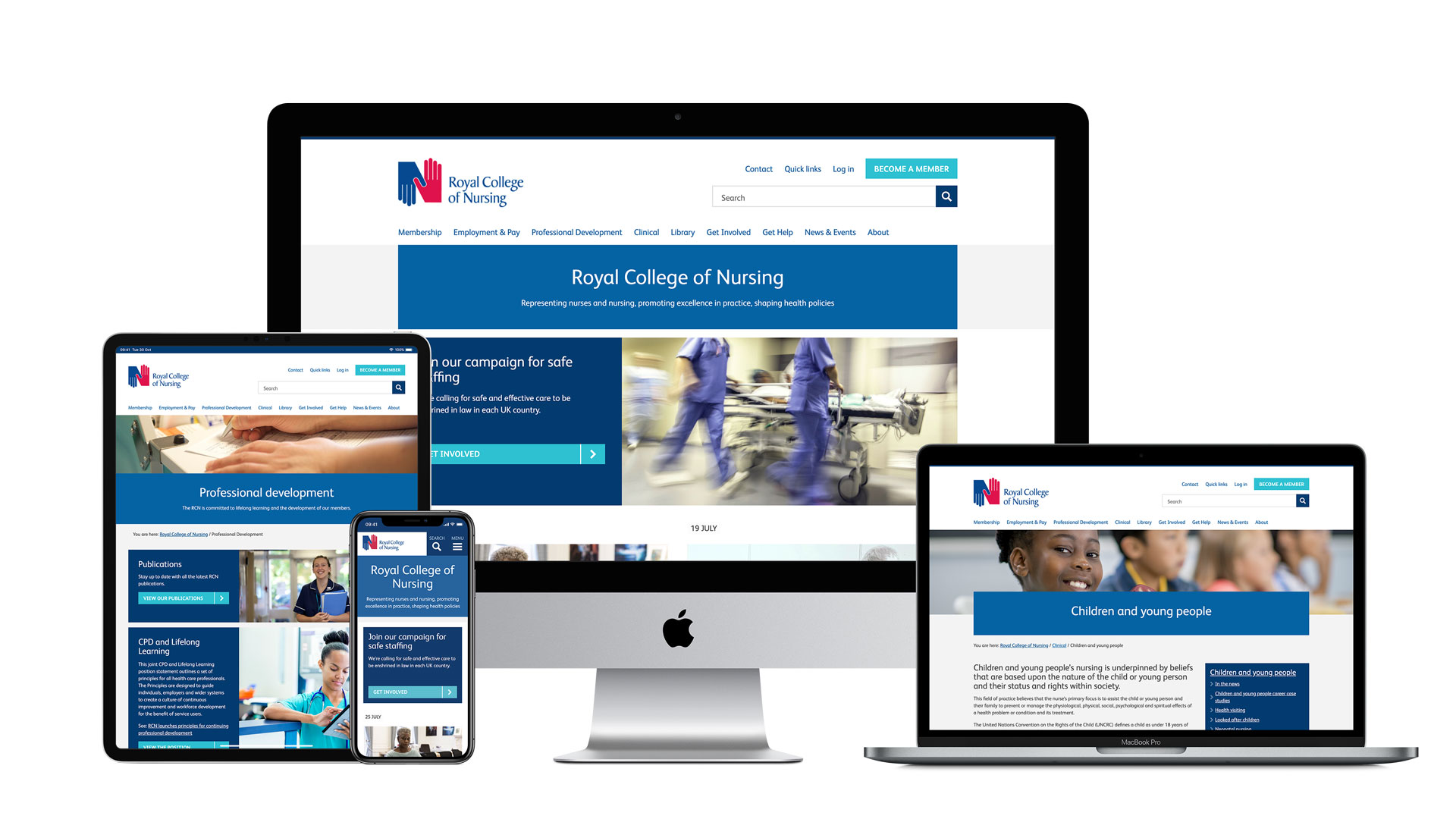
- One platform replacing the microsites, with one consistent brand.
- Findable content. Content was analysed and prioritised so the most-needed information is easiest to reach.
- A content strategy covering how much content is kept and how it’s written, for consistency and accessibility.
- Better tools for editors. A customised Sitecore admin area, with templates and content types built around what visitors need.
- A design that works on phones and tablets, for members on the move.
The way the Box UK team conducted things was fantastic and the response and feedback we have captured I am sure will prove invaluable to the further development of the website.
Paul Newman, Head of IT, the Royal College of Nursing
Delivery
A beta version launched at the RCN’s annual Congress, which had more than 5,000 attendees. Over three days, our UX consultants ran 114 guerrilla usability sessions on desktop, tablet and phone, backed by questionnaires, interviews and feedback cards. Because there were so many sessions, the findings could be split by audience, from qualified nurses to students, so the RCN could decide what to improve first.
Testing continued through soft launch to full launch, with findings feeding straight back into development.
The outcome
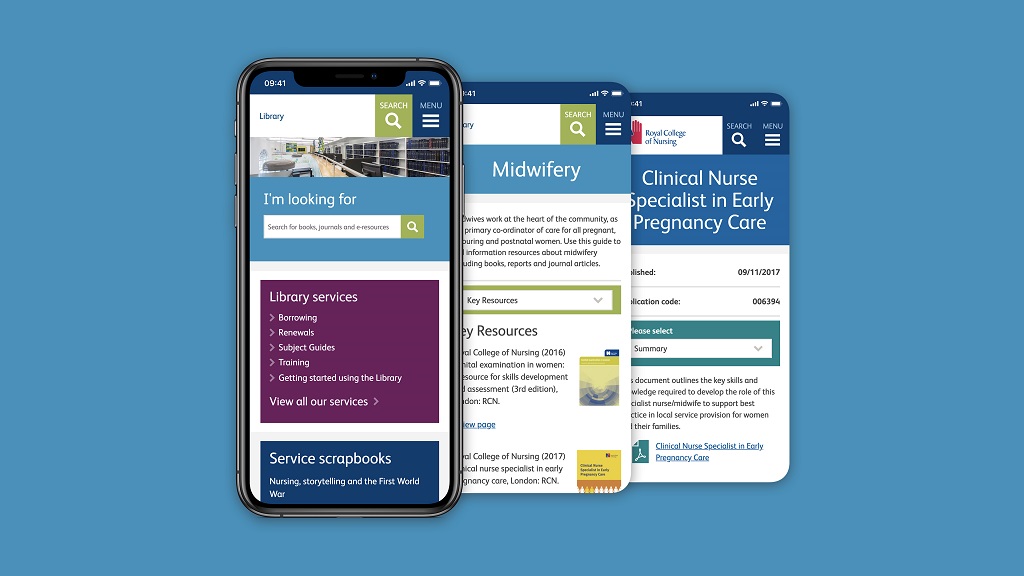
- A single, coherent RCN online presence, with one brand in place of separately branded microsites.
- Easier navigation through 30,000+ pages and documents. Members testing the new site called it a “massive improvement on looks and ease of navigation”.
- A cleaner, modern interface that participants described as less cluttered than the old site.
- Very positive member feedback, measured with a Net Promoter Score at Congress.
- Better tools for editors to publish consistent, accessible content.
Frequently asked questions
Start with discovery across every site, audience and editor, then design one structure and content strategy that covers them all. The RCN’s microsites were brought into a single Sitecore platform with one brand.
Analyse what people use, prioritise it, and design navigation and search around the most common tasks. The RCN’s 30,000+ pages and documents were reorganised this way.
Early. The RCN showed a beta at its annual Congress, where we ran 114 usability sessions with members, and kept testing through to full launch.
It stops the new site becoming cluttered again, by setting rules for what content is kept and how it’s written.
Keep sessions short and the equipment portable. At the RCN’s Congress, we set up in a busy area with desktop, tablet and phone, and asked members for 10 to 15 minutes each. Self-guided tests ran alongside moderated sessions, so we could see more people in the time available.
What this means
for your organisation
If you’re a membership body or professional association whose online presence has grown into a collection of microsites and cluttered pages, your members are paying the price in time and patience.
Consolidation is as much about content and editors as it is about technology. If you’re weighing it up, send us a few lines about your sites. We’ll tell you where we’d start.
Talk to one of our digital experts

Allie Brock
Chief Solutions Officer
Do you have a great idea for a project?
Allie has over 20 years of cross-sector experience at Box UK, and brings a unique perspective to strategic planning by translating data into actionable, impactful strategies that can drive organisational growth and innovation.
Or call us on 020 7439 1900
Related case studies
-


The Pharmaceutical Journal
Read more: The Pharmaceutical JournalMoving the Pharmaceutical Journal onto enterprise WordPress
-

-

RCN Usability Testing
Read more: RCN Usability TestingTesting the RCN’s new website with members during beta
Have a project you’d like to discuss?
Give us a call on 020 7439 1900 or fill in the form and we will get back to you.